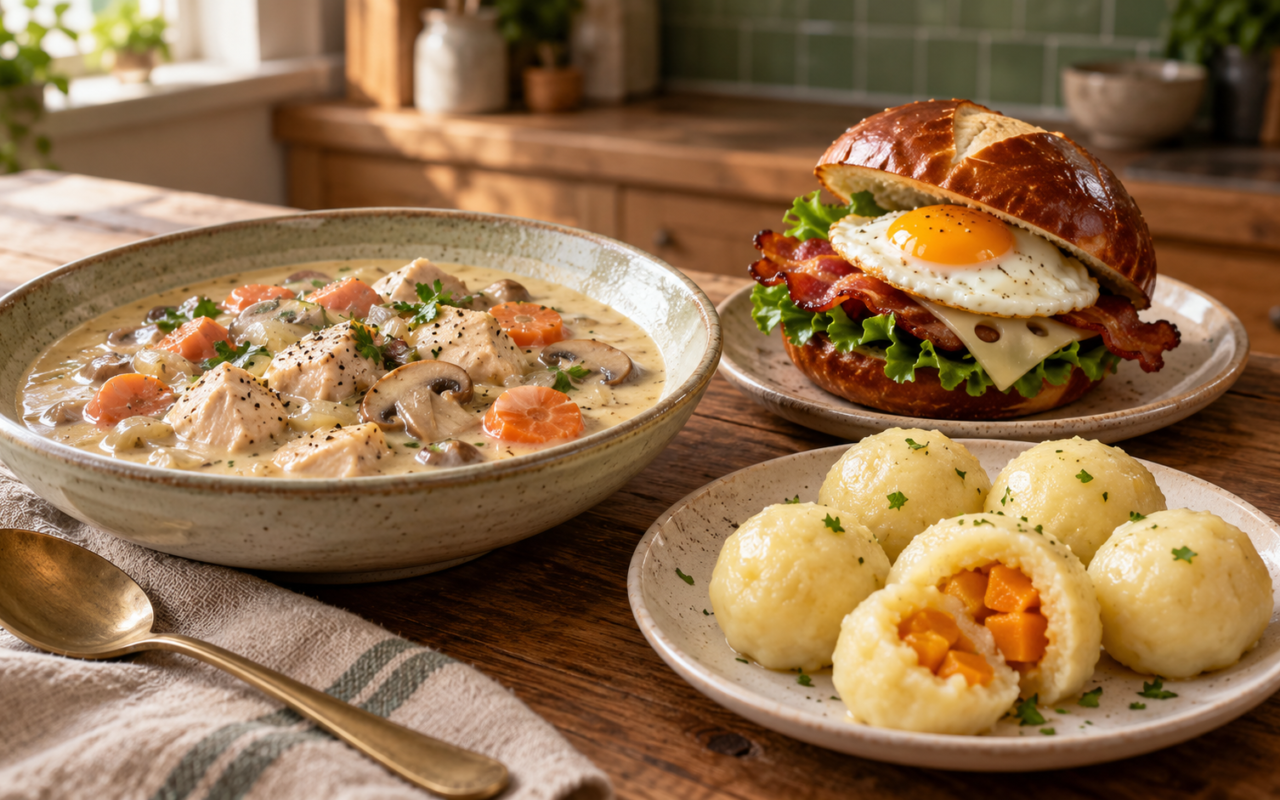
A creamy stew, a bacon-and-egg sandwich tucked into a pretzel bun, and soft potato dumplings with a pumpkin center: Qifrey’s feast is the kind of anime-inspired meal that makes you want to step away from the screen and start cooking.
This Nana Dish home adaptation takes its inspiration from Witch Hat Atelier, Season 1, Episode 6. The episode connects cooking with everyday magic; here, ordinary ingredients do the work. Chicken, mushrooms, and cream make a comforting stew, while crisp bacon and a toasted bun bring contrast. Pumpkin-filled dumplings round out the table.
Recipe note: This is an unofficial fan-inspired adaptation of the ingredient list shared with Nana Dish, with suggested quantities and a practical cooking method added for home cooks. It is not an official recipe from the series. “Husk potato dumplings” is the name used in the submitted recipe; this version uses peeled potatoes and a pumpkin filling, with no edible husk or wrapper.
Jump to ingredients and method ↓ · Step-by-step instructions ↓
Qifrey’s Feast Recipe at a Glance
- Yield: 1–2 servings of stew, 1 sandwich, and approximately 8–10 small dumplings. Share the sandwich for a two-person tasting feast, or double the sandwich ingredients for one each.
- Preparation: about 25 minutes.
- Cooking: about 45 minutes, with tasks overlapping.
- Total: approximately 70 minutes; allow extra time on your first attempt.
- Equipment: saucepan, skillet, potato pot, dumpling pot, potato ricer or masher, slotted spoon, and an instant-read food thermometer.
Start with the potatoes and pumpkin, then cook the stew while they soften. Shape and poach the dumplings next, keeping the stew warm. Toast the bun and cook the egg just before serving so the sandwich stays crisp.
Part 1: Qifrey’s Cream Stew
This small-batch chicken cream stew gets its body from a little flour rather than a large amount of cream. Cut the carrot thinly and the chicken into even pieces so everything finishes cooking without the chicken drying out.
Ingredients
Cream Stew Ingredients (1–2 servings)
- ½ boneless, skinless chicken breast, roughly 100–150 g, cut into 2 cm pieces
- 1 medium carrot, thinly sliced
- ½ onion, diced
- 5 mushrooms, cleaned and sliced
- 5 g butter
- ½ tablespoon olive oil
- 15 g all-purpose flour
- 250 ml chicken stock, preferably low-sodium
- 60 ml heavy cream
- 1 small bay leaf
- 1 small thyme sprig, or ¼ teaspoon dried thyme
- 1 tablespoon chopped parsley, for finishing
- Salt and black pepper, to taste
Step-by-Step Instructions
How to Make the Cream Stew
- Prepare the ingredients. Wash and cut the vegetables before handling raw chicken. Use a separate board for the chicken, then wash your hands and clean the equipment. Do not rinse raw chicken.
- Start the base. Heat the olive oil and butter in a saucepan over medium heat. Add the chicken and cook for 2–3 minutes, turning the pieces. They do not need to be fully cooked yet.
- Soften the vegetables. Add the onion and carrot. Cook for about 4 minutes, stirring, then add the mushrooms and cook for another 3 minutes. Reduce the heat if the base starts catching.
- Add the flour. Sprinkle in the flour and stir for 1 minute to coat the ingredients.
- Build the sauce. Gradually pour in the chicken stock, stirring to prevent lumps. Add the bay leaf and thyme. Bring to a gentle simmer and cook for approximately 12–15 minutes, stirring occasionally, until the carrot is tender and the sauce lightly coats a spoon.
- Finish with cream. Stir in the heavy cream and gently heat for another 2–3 minutes. Check the thickest chicken pieces with a thermometer: they must reach 74°C / 165°F. Continue cooking if needed. Remove the bay leaf and woody thyme stem, then taste before adding salt and pepper. Finish with parsley.
Adjust the texture: If the stew is too thick, add stock or water a tablespoon at a time. If it is thin, simmer gently for a few more minutes, stirring. Avoid a hard boil after adding the cream.
Part 2: Bacon Egg Pretzel Sandwich
The submitted sandwich list did not specify quantities for every ingredient. The amounts below make one generously filled sandwich; multiply them by the number of buns you want to serve.
Ingredients — 1 sandwich
- 1 pretzel bun, split
- 5 g butter, divided between toasting and frying
- 2 strips bacon
- 1–2 lettuce leaves, washed and thoroughly dried
- 1 large egg; use a commercially pasteurized shell egg if choosing a soft yolk
- 1 slice Swiss cheese
- Black pepper and a small pinch of salt, if needed
Instructions: Assemble the Sandwich
- Cook the bacon. Follow the package cooking instructions in a skillet until thoroughly cooked and as crisp as you like. Transfer to a clean plate.
- Toast the bun. Lightly butter the cut sides and toast in the skillet until golden. Put the Swiss cheese on the warm bottom half so it starts to soften.
- Fry the egg. Add the remaining butter to the skillet over medium-low heat. Crack in the egg and cook gently. For the safest result, cook until both the white and yolk are firm; covering the skillet helps the top set. If choosing the original sunny-side-up look with a soft yolk, use a commercially pasteurized shell egg. People at higher risk of foodborne illness should have a fully cooked egg.
- Layer and serve. Add the dry lettuce, bacon, and fried egg to the bun with the cheese. Season lightly, close the sandwich, and serve immediately.
Keep the bun crisp: Dry lettuce matters more than extra toasting. Assemble only when the stew and dumplings are ready, and let excess bacon fat drain before layering.
Part 3: Husk Potato Dumplings with Pumpkin
These dumplings use cooked, mashed potatoes bound with potato starch and egg yolk. The pumpkin is cooked separately before being tucked inside, so the filling does not depend on a short poach to soften. Their texture should be tender and lightly springy, rather than bread-like.
Ingredients — approximately 8–10 small dumplings
- 250 g starchy potatoes, weighed after peeling
- 50–75 g potato starch, plus extra for dusting
- 1 egg yolk
- 1 teaspoon fine salt, as submitted; reduce to ½ teaspoon if preferred, plus salt for the cooking water
- A small pinch of ground nutmeg
- 50 g peeled pumpkin, cut into very small cubes
Instructions: How to Make the Dumplings
- Cook the potatoes. Cut into evenly sized chunks, place in a pot, and cover with cold water. Bring to a boil, then simmer for 15–20 minutes, or until completely tender. Drain well and return to the warm pot off the heat for 2–3 minutes to let moisture evaporate.
- Cook the pumpkin. Meanwhile, steam the small pumpkin cubes for about 5–8 minutes until tender but still holding their shape. Drain, let steam escape, and cool. The filling should be dry rather than wet.
- Mash and cool. Rice or thoroughly mash the potatoes while warm. Spread them in a bowl and let them cool until no longer hot before adding the yolk. Do not use a blender, which can make potatoes gluey.
- Make the dough. Add the egg yolk, salt, nutmeg, and 50 g potato starch. Mix gently until the dough comes together. Add the remaining starch a little at a time only if needed. Potato moisture varies: aim for a soft dough that holds its shape, not a stiff, dry dough. Do not taste the raw dough.
- Fill and seal. Dust your hands and work surface lightly with starch. Divide the dough into 8–10 pieces. Flatten each into a small disc, add a few pumpkin cubes, then pinch the edges closed and gently roll into a ball. Avoid overfilling and seal any cracks.
- Test one first. Bring a wide pot of lightly salted water to a gentle simmer. Lower in one dumpling. If it breaks apart, work a little more potato starch into the remaining dough and reseal carefully. Keep the water below a vigorous boil.
- Poach in batches. Add the remaining dumplings without crowding. They will usually rise after a few minutes; continue gently poaching for approximately 3–5 minutes after they float. Size affects timing, and floating alone does not confirm doneness. Check that the dough is set throughout and the center reaches at least 71°C / 160°F because it contains egg yolk. Cook longer as needed.
- Drain and serve. Lift out with a slotted spoon and let excess water drain before plating. Serve alongside the cream stew, spooning a little sauce over them if you like.
Small Changes That Help This Feast Work
- Use starchy potatoes: Floury potatoes such as Russet work better than very waxy varieties for this dough.
- Weigh the starch: Starting at 50 g gives you room to adjust. Adding all 75 g immediately can make a drier potato dough unnecessarily firm.
- Keep pumpkin cubes small: Large pieces make the dumplings harder to seal and more likely to split.
- Season at the end: Bacon, Swiss cheese, stock, and pretzel buns can already contribute plenty of salt.
- Make a smaller meal: Cook only the cream stew and dumplings, or make the sandwich on its own. The three components do not have to be served together.
Storage, Reheating, and Food Safety
Refrigerate the stew and cooked dumplings in separate shallow containers within 2 hours of cooking, or within 1 hour if the temperature is above 32°C / 90°F. Keep the refrigerator at 4°C / 40°F or below and use refrigerated leftovers within 3–4 days.
Reheat leftover stew and dumplings to 74°C / 165°F. Bring the stew to a boil while stirring, adding a splash of stock if needed. The cream sauce may separate slightly during reheating. The sandwich is best freshly assembled; store cooked bacon separately and prepare a fresh egg and toasted bun when serving again.
Allergens: This meal contains milk, eggs, and wheat. Check stock, bacon, cheese, and bun labels for additional allergens. The stew contains wheat flour and the sandwich contains wheat bread. Nutmeg is a spice, not a tree nut.
Frequently Asked Questions
Is this the official Witch Hat Atelier recipe?
No. This is a fan-inspired home adaptation using the submitted ingredients. The pumpkin-filled dumpling technique and sandwich quantities are practical additions for this version.
Can I use cornstarch instead of potato starch?
Potato starch is the intended ingredient here. Cornstarch behaves differently, so a direct substitution can change the texture and binding. Potato flour is also different from potato starch; check the label before buying.
Can I prepare part of the feast ahead?
The stew can be made ahead, promptly refrigerated, and thoroughly reheated. The dumplings have the best texture soon after cooking. Prepare the sandwich at the last moment to preserve its toasted bun and fresh lettuce.
Why did my dumplings fall apart?
Common causes are wet potatoes, damp pumpkin filling, unsealed seams, too little starch, or water boiling too vigorously. Steam-dry the potatoes, keep the filling dry, and test a single dumpling before cooking the batch.
Image disclosure: The recipe photograph is AI-generated as an illustration of this adaptation; it is not evidence of a kitchen test.
Recipe Inspiration and Cooking References
Episode context: Crunchyroll’s Witch Hat Atelier Episode 6 recap. Cooking guidance: FoodSafety.gov minimum temperatures, USDA food handling and leftovers guidance, and FDA egg safety guidance.