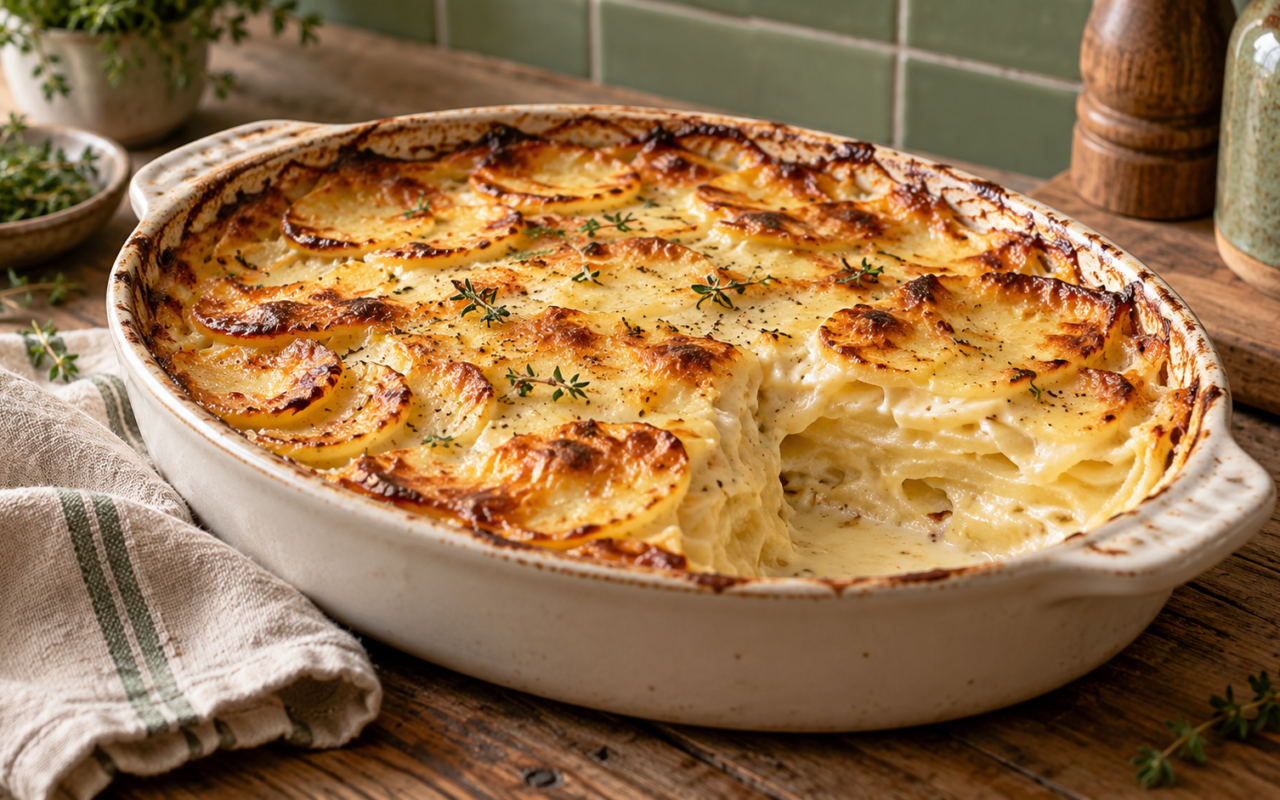
Nana today will prepare gratin dauphinois: thin layers of potatoes baked in garlic-infused milk and cream until tender, with a golden surface and soft, creamy middle. It is a comforting side dish for a Sunday lunch, a family dinner or a special meal when you want the oven to do most of the work.
This gratin dauphinois recipe keeps the ingredient list simple: potatoes, milk, heavy cream, garlic, butter and herbs. There is no flour sauce to make and no need to boil the potatoes first. The important details are slicing evenly, covering the dish properly and checking the centre before finishing the top.
The version shared here includes an optional cheese topping. Traditional gratin dauphinois is generally prepared without cheese, so you can leave it out for a more classic finish or add it at the end for a cheesy variation.
Featured image: AI-generated recipe illustration. See our AI Content & Image Policy.
Jump to ingredients and method ↓ · Step-by-step instructions ↓
Gratin Dauphinois Recipe
Thinly sliced potatoes baked in a warm mixture of milk, heavy cream, garlic, thyme and bay leaf, with an optional golden cheese topping.
- Serves: 8 as a side dish
- Preparation: about 25 minutes
- Cooking: about 1 hour 45 minutes, allowing longer if the centre is still firm
- Resting: 15 minutes
- Total: about 2 hours 25 minutes
- Oven: 200°C / 400°F conventional, or 180°C fan
- Dish: approximately 30 × 20 cm, at least 5 cm deep, with room above the filling
Ingredients
- 1.5 kg potatoes, weighed before peeling; use an all-purpose variety such as Yukon Gold or Maris Piper
- 400 g whole milk, approximately 390 ml
- 500 g heavy cream, approximately 500 ml; preferably 35–36% fat
- 2 garlic cloves, peeled and finely grated or minced
- 30 g unsalted butter, divided: about 10 g for the dish and 20 g for the cream mixture
- 2–3 small fresh thyme sprigs, or ½ teaspoon dried thyme
- 1 dried bay leaf
- 1½ teaspoons fine salt, approximately 8–9 g, or to taste
- ½ teaspoon freshly ground black pepper
- Optional topping: 80–100 g freshly grated Gruyère or Emmental
Measurement note: the milk and cream are measured by weight. The volume equivalents are approximate; use a kitchen scale if possible. Use the optional cheese quantity for the cheese-topped variation.
Equipment
You will need an oven-safe baking dish, a saucepan, a sharp knife or mandoline with a safety guard, baking parchment, aluminum foil and a thin knife or skewer to test the potatoes. Use parchment rated for the oven temperature.
Step-by-Step Instructions
- Heat the oven and grease the dish. Preheat to 200°C / 400°F conventional or 180°C fan. Butter the base and sides of the baking dish with about 10 g of the butter. Place a baking tray on the rack below to catch any drips.
- Prepare the potatoes. Wash, peel and slice the potatoes into even rounds about 2–3 mm thick. If using a mandoline, keep the guard in place. Do not rinse or soak the slices after cutting: the surface starch helps thicken the cream as the gratin bakes.
- Arrange the layers. Spread the potatoes evenly in the dish, overlapping the slices and separating any that are stuck together. Keep the depth consistent across the dish rather than building a mound in the middle.
- Warm the cream mixture. Put the milk, heavy cream, garlic, remaining 20 g butter, thyme, bay leaf, salt and pepper in a saucepan. Warm gently, stirring occasionally, until the butter melts and small bubbles appear around the edge. Keep it below a rolling boil. Let the herbs infuse over low heat for about 5 minutes, then remove the bay leaf and any woody thyme stems.
- Add the liquid and cover. Pour the hot mixture slowly over the potatoes, letting it flow between the layers. Press the slices down gently with a spoon. The liquid should come close to the top layer, with space above it to prevent overflow. Cover with baking parchment, then seal tightly with foil.
- Bake until tender. Bake on the middle rack for about 90 minutes. Start checking around 75 minutes if the layers are shallow. Carefully lift the covering away from your face and insert a thin knife into the centre and a second spot. It should slide through the potatoes with very little resistance. If the centre is firm, re-cover and bake for another 10–15 minutes, then check again.
- Finish the surface. Once the potatoes are tender, remove both the foil and parchment. For the cheese variation, scatter the grated cheese evenly over the top. Return the dish to the oven for about 10–15 minutes, until the surface is golden and the cream bubbles at the edges. Without cheese, uncover and bake until the cream develops a lightly browned surface. Watch closely during this final stage.
- Rest before serving. Set the dish on a heatproof surface and leave it for about 15 minutes. The sauce will settle and the portions will be easier to lift. Serve warm, spooning a little of the thickened cream alongside each portion.
Allergen information: contains milk and dairy products. If you need a vegetarian dish, choose cheese made with vegetarian rennet or omit the optional topping.
What Makes Gratin Dauphinois So Creamy?
The potatoes cook directly in the milk and cream. As they soften, they release starch into the surrounding liquid, helping it become a sauce without flour or a separate roux. Heavy cream supplies richness, while milk keeps the mixture loose enough to move between the layers.
Covering the dish during the first stage traps moisture and protects the surface while the centre cooks. Uncovering at the end allows the top to brown. These two stages serve different purposes: a golden crust can appear before the potatoes underneath are tender, so always check the centre before adding cheese or finishing the surface.
Choosing and Slicing the Potatoes
An all-purpose potato is a useful starting point because it provides enough starch to help the sauce while keeping recognizable layers. Yukon Gold and Maris Piper are good options where available. Very floury potatoes can soften and break down more, while very waxy potatoes tend to hold a firmer shape and may leave a looser sauce.
Use one variety throughout the dish so the slices cook at a similar rate. The exact potato count is less reliable than weight: six large potatoes can weigh very differently from six small ones.
Aim for slices about 2–3 mm thick. Much thicker rounds need extra time, especially in the middle of a deep dish. If cutting by hand, work slowly and aim for consistency rather than perfectly round slices. Arrange small end pieces between larger rounds so they cook in the cream instead of sitting exposed on top.
Wash the potatoes before peeling and slicing, but skip rinsing the cut rounds. Avoid preparing them hours ahead in a bowl of water for this recipe, because that washes away some of the starch you want in the sauce.
Does Gratin Dauphinois Need Cheese?
No. In its traditional form, gratin dauphinois relies on potatoes, dairy, garlic and seasoning rather than a cheese topping. The uncovered cream can brown on its own. The thyme and bay leaf in this version add a gentle herbal note.
For the cheese-topped variation, finish with grated cheese after the potatoes are tender. Gruyère or Emmental adds a savoury top; using 80–100 g gives coverage without turning the dish into a thick cheese crust. Add it only after the potatoes are tender. If you leave it out, follow the same covered cooking stage and finish uncovered.
Small Details That Improve the Result
- Choose the right dish depth. A very deep casserole changes the cooking time. Spread the potatoes in a broad, even layer and leave headroom for bubbling cream.
- Warm the dairy gently. The goal is melted butter and infused flavour. Vigorous boiling can make the dairy more likely to separate.
- Seal the covering. A loose piece of foil lets moisture escape early, which can dry the edges before the middle is ready.
- Use tenderness as the deciding test. Ovens, potato varieties and slice thickness vary. The suggested time is a guide rather than a substitute for checking.
- Allow the rest. Immediately out of the oven, the cream is very hot and fluid. A short rest gives a creamier serving consistency.
Troubleshooting Your Potato Gratin
The top is brown but the middle is still firm
Re-cover the dish and continue baking in 10–15 minute intervals. If the surface is colouring rapidly, reduce the oven to 180°C conventional or 160°C fan. Next time, check for uneven or overly thick slices and avoid packing the potatoes into a very deep layer.
The sauce looks too watery
First, check that the potatoes are fully tender. If they are, give the dish a short uncovered finish and let it rest before judging the sauce. Rinsed slices, very waxy potatoes, low-fat dairy or extra liquid can all produce a thinner result. Do not keep baking indefinitely just to eliminate every trace of sauce; the finished dish should still be creamy.
The cream looks oily or separated
A little butter or cream fat around the edges can occur in a rich gratin. Pronounced separation is more likely with intense heat or a hard-boiled cream mixture. Warm the dairy gently and use the suggested heavy cream rather than substituting all milk.
The edges are dry
Check the foil seal and whether the liquid reached close to the upper potato layer. If the potatoes still need cooking and the dish is drying out, add a small splash of hot milk around the edges and cover again. Avoid adding a large quantity, which can dilute the sauce.
What to Serve with Gratin Dauphinois
Serve this rich potato bake with roast chicken, roasted lamb, pan-seared mushrooms or a simple vegetable main. Green beans, broccoli, a crisp leaf salad or vegetables dressed with lemon provide a fresh accompaniment without another creamy sauce.
For a different potato side another day, try Nana Dish’s garlic butter smashed potatoes with whipped feta. If you enjoy creamy family dinners, our one pot creamy chicken pasta is another option for your weekly menu.
Make-Ahead, Storage and Reheating
For a make-ahead meal, bake the gratin until fully cooked, then divide leftovers into shallow containers and refrigerate promptly. Avoid leaving the whole deep dish on the counter until completely cold. Refrigerate within 2 hours of cooking, or within 1 hour when the surrounding temperature is above 32°C / 90°F.
Keep refrigerated at 4°C / 40°F or below and use within 3–4 days. Reheat only the amount you plan to serve. For an oven reheating method, put the portion in an oven-safe dish, cover and heat at 180°C / 350°F until it reaches 74°C / 165°F throughout. Add a small splash of milk if it looks dry and uncover briefly at the end if you want to refresh the top.
You can also microwave individual portions in a covered, vented microwave-safe container. Rotate the portion and check several places with a food thermometer because dense potato layers can heat unevenly. Reheating time depends on portion size and starting temperature.
For longer storage, freeze cooled portions promptly in freezer-safe containers. The cream may separate slightly and the potatoes can soften after thawing, so freezing is a convenience option rather than a way to preserve the exact fresh-baked texture. Thaw in the refrigerator and reheat thoroughly.
Storage guidance follows USDA guidance on leftovers and food safety. See also Nana Dish’s Recipe Testing & Food Safety policy.
Frequently Asked Questions
Do I need to boil the potatoes first?
No. This method uses raw, thinly sliced potatoes. They cook in the milk and cream during the covered baking stage. Pre-boiling changes both their texture and how much starch reaches the sauce.
Can I use milk instead of heavy cream?
Replacing all the cream with milk produces a much lighter and generally thinner sauce. It is not a direct swap for this recipe. Keep the supplied milk-to-cream balance for the intended creamy result.
Can I halve the recipe?
Yes. Halve all the ingredients and choose a smaller dish that keeps a similar depth of potatoes. Begin checking earlier, around 60 minutes, but let a knife test decide when the centre is ready.
Can I double it for a gathering?
Use two similar baking dishes rather than one much deeper dish. Allow space for air to circulate in the oven, check both dishes and expect some variation in cooking time. Divide the potatoes and liquid evenly.
Is this the same as dauphinoise potatoes?
Dauphinoise potatoes is a common English name for gratin dauphinois. Restaurant and home versions vary, especially in their use of cheese, herbs and the proportion of milk to cream.
Can I make it without thyme or bay leaf?
Yes. You can leave either herb out and keep the garlic, salt and pepper. Remove the bay leaf and woody thyme stems after infusing the cream so they do not end up hidden between the potato layers.
Have a question about your potatoes, baking dish or oven? Share the details in the comments or contact Nana Dish so we can help you work through the recipe.